

This buyer’s guide compares gender neutral kids clothing brands that parents can shop right now. We carefully checked each brand’s own site for what it sells, the sizes it carries, and whether its styles are named or sorted by gender.
You walk into the kids’ section and the store splits in two: pink and purple sitting on one side, blue and gray on the other, and a sign over each. Your kid just wants the shirt with the shark on it, and maybe underwear that doesn’t bug them. The good news is that more brands now skip the split entirely.
Key Takeaways
- Gender-neutral kids’ clothing brands sort their products by age, size, or style instead of by “boys” and “girls.”
- Primary sells baby clothes in sizes 0 to 24 months and toddler and kids’ clothes in sizes 2 to 14, organized by age instead of gender.
- Tiny Undies makes small-sized underwear for children from 6 months to 5T and keeps its underwear gender-neutral and solid-colored by design.
- Q for Quinn names its kids’ underwear styles with first names like Luca, Sophie, and Rose, in sizes from 18 months to 14 years.
- The American Academy of Pediatrics says all children need the opportunity to explore different gender roles and different styles of play.
Quick answer: Three good gender-neutral kids’ clothing brands to start with are Primary for everyday basics, Tiny Undies for baby and toddler underwear, and Q for Quinn for kids’ underwear up to size 14. Hanna Andersson also carries a wide size range, but it lists kids’ underwear under separate girls’ and boys’ menus.
What Makes a Kids’ Clothing Brand Gender-Neutral?
A gender-neutral brand lets the clothes speak for themselves. Instead of a “girls” aisle and a “boys” aisle, you shop by age, size, color, or style. The kid picks what they like, and nobody has to cross an invisible line to get it.
Some brands go all the way. Others sell clothes that work for any kid but still sort them into gendered menus online. Both can be good choices, and knowing the difference just makes shopping faster.
Here are the signs a brand is built to be gender-neutral:
- Categories by age or size. You see “Baby” and “Kids,” not “Girls” and “Boys.”
- Neutral product names. Styles are named by shape, color, or even a person’s first name.
- Fit based on bodies. Sizing is described by height, weight, or body type instead of gender.
- Prints for everyone. Sharks, rainbows, trucks, and flowers show up across the whole line.
The American Academy of Pediatrics notes that children often express themselves through clothing and hairstyle. It also says all children need the chance to explore different styles of play. A closet without labels makes that a little easier.
How We Picked These Brands
We started with a long list of brands that parents often mention. Then we visited each brand’s own website to confirm what it sells today. Brands change their lines often, so we only kept the ones we could check directly.
For each brand, we looked at three things:
- What they sell. Full wardrobe basics, or a focus like underwear.
- Sizes. The smallest and largest sizes listed on the brand’s site.
- How styles are named. Whether products are sorted or labeled by gender, or by something else.
We left out brands whose kids’ lines we couldn’t confirm on their own sites. That doesn’t mean those brands are bad. It just means we couldn’t verify the details in time for this guide.
The Brands at a Glance
| Brand | What they sell | Sizes | How styles are named |
|---|---|---|---|
| Primary | Baby and kids’ basics: tees, dresses, rompers, outerwear, and swimwear | 0 to 24 months, then 2 to 14 | By age group and product type, not gender |
| Tiny Undies | Small-sized underwear, boxers, and training pants | 6 months to 5T | Neutral names like Undies, Boxers, and Trainers |
| Q for Quinn | Kids’ underwear in boxer brief, hipster, and classic brief styles | 18 months to 14 years | First names like Luca, Sophie, and Rose; some product copy says “boys” or “girls” |
| Hanna Andersson | Kids’ clothing, pajamas, and underwear | 18 months to size 16 | Listed under separate Girl and Boy menus |
| Unbinned Wear (coming soon) | Kids’ underwear | 2T to 12 | By fit shape: Flat Front, Contour, and U-Shape |
Primary: Everyday Basics Sorted by Age
Primary is a full-wardrobe brand for babies and kids. Its site splits products into Baby (0 to 24 months) and Toddler and Kids (2 to 14 years). You won’t find a “boys” or “girls” menu.
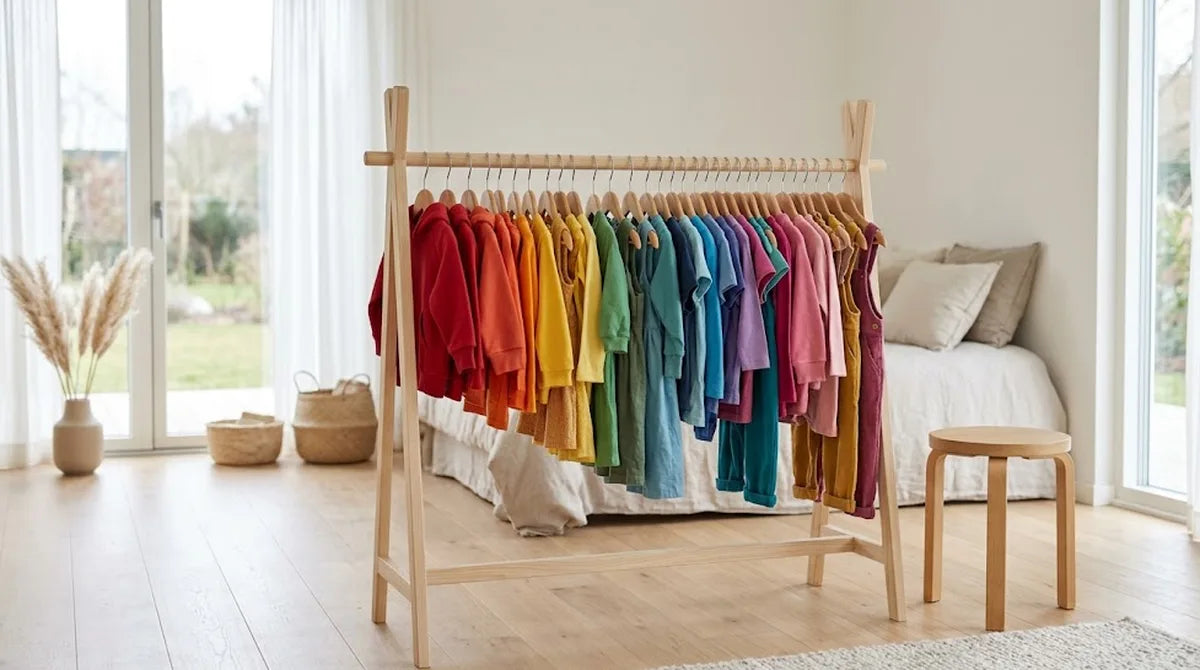
The brand describes its mission as making gender-inclusive clothing. Its design team says it thinks about sizing in terms of body type, not gender. Each style starts from two base sizes, size 3 and size 10.
Primary is a good fit if you want:
- Simple basics in lots of colors, from tees to dresses.
- One place to shop for siblings of different ages.
- A store where your kid can browse everything without being steered.
Tiny Undies: Underwear for the Smallest Kids
Tiny Undies focuses on underwear and training pants for very young children. Its smaller-sizing line fits kids from 6 months through 5T. That makes it useful for families who start potty learning early.
The brand says it keeps its underwear gender-neutral and solid-colored by design. Product names are plain: Tiny Undies, Tiny Boxers, and Tiny Trainers. The site even notes that its boxers are a favorite with self-dressers, both boys and girls.
If your little one is just starting out, our guide to gender-neutral toddler underwear for potty training walks through what to look for at that stage.
Q for Quinn: Kids’ Underwear Named Like People
Q for Quinn sells kids’ underwear in three main shapes: boxer briefs, hipster briefs, and classic briefs. Sizes run from 18 months to 14 years. That is one of the widest underwear size ranges on this list.
Instead of labeling styles by gender, Q for Quinn names them like people: Ryan, Luca, Sophie, Luna, and Rose. Some product descriptions still use phrases like “boys underwear” or “girls underwear.” Even so, the brand states that all of its styles are designed for every child, regardless of gender.
Here is how to shop it with an open mind:
- Pick by shape first: boxer brief, hipster, or classic brief.
- Treat the names as style names, not as signals of who should wear them.
- Let your kid choose the colors and prints.
Hanna Andersson: Wide Sizes, Sorted by Gender
Hanna Andersson is a well-known kids’ brand with a big size range. Its kids’ size chart runs from XS (18 months to 3) through XL (14 to 16). Sizing is based on height in centimeters, which takes some of the guessing out of it.
On the website, kids’ underwear sits under separate Girl and Boy menus. That is a buying consideration, not a dealbreaker. Many families simply shop both menus and let their kid pick.
“The best label inside a kid’s clothes is the size. Everything else is just a suggestion.”
Unbinned Wear: Coming Soon
We’d be leaving something out if we didn’t mention our own brand. Unbinned Wear makes kids’ underwear named by fit, not gender, in sizes 2T to 12. We are not selling yet, so for now you can only join the waitlist.
Our three fits are named by shape: Flat Front, Contour, and U-Shape. Every fit is for every kid. You can compare them side by side in our fit guide.
We also use flat-lock seams, where the edges lie flat instead of standing up in a ridge, and we skip tags completely. You can read the story behind the name in why we stopped gendering underwear.
What to Check Before You Buy
A brand’s label is only part of the story. For kids’ clothing, and especially underwear, comfort often matters more than anything printed on the tag. Here is how we’d rank what to look for.
Comfort Comes First
If your kid fights getting dressed, the problem may be the feel, not the look. Tags, raised seams, and tight waistbands are common complaints. Our post on why your kid hates underwear covers seven common reasons and what helps.
For kids who are extra sensitive, check these details:
- Tags. Printed labels or no labels at all are easier on sensitive skin.
- Seams. Flat seams are less likely to rub than raised ones.
- Waistbands. Look for bands that stay put without digging in.
Our sensory-friendly clothing checklist has more tips for school mornings.
Size Range Matters as Kids Grow
A brand that stops at 5T won’t carry your kid through grade school. If you love a brand, check its largest size before you build a whole drawer around it. Mixing brands by age is completely normal.
How to Shop When a Brand Sorts by Gender
Plenty of great kids’ clothes live behind a “boys” or “girls” menu. You can still shop them in a way that keeps the choice with your kid. A few small habits make it easy.
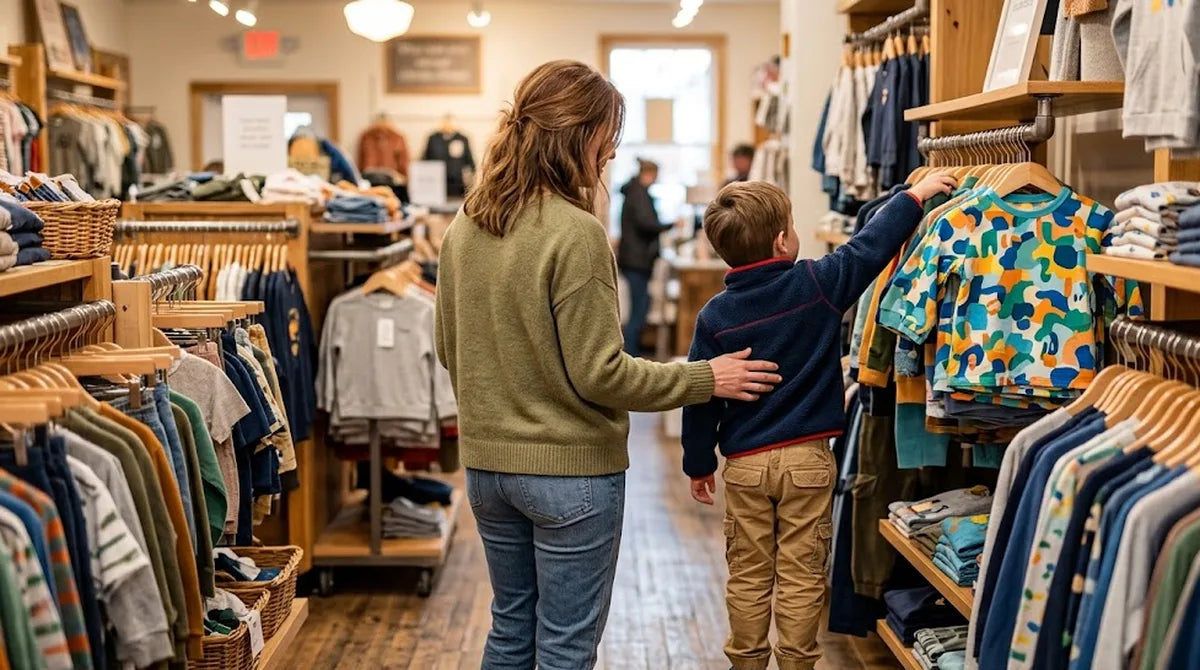
- Shop both menus. Browse every section and let your kid pick what they love.
- Talk about fit, not labels. Say “this one is roomier” instead of “this one is for boys.”
- Cut out the label if it bothers them. Many kids never think about it again once it’s gone.
- Have a short reply ready. If someone comments, “They just like it” is a complete answer.
If your child is drawn to clothes from the “other” aisle, you’re not alone. Our posts on what to say when your son wants to wear dresses and how to support a gender nonconforming child share calm, practical next steps.
Join the Founding Families
Unbinned Wear makes kids’ underwear named by fit, not gender, with flat-lock seams and no tags, in sizes 2T to 12 today. Founding Families get first access to our Kickstarter link before the public and a say in which fits, sizes, and colors get made first.
Frequently Asked Questions
What are the best gender-neutral kids’ clothing brands?
Primary, Tiny Undies, and Q for Quinn are three brands that sort or name their kids’ products without leaning on gender. Primary covers everyday basics, while Tiny Undies and Q for Quinn focus on underwear. The best choice depends on your child’s age and what they need most.
Does Primary sell clothes for older kids?
Yes. Primary’s site lists Baby sizes from 0 to 24 months and Toddler and Kids sizes from 2 to 14 years.
What sizes does Tiny Undies carry?
Tiny Undies’ smaller-sizing line fits children from 6 months through 5T. It is aimed at babies and toddlers, especially families starting potty learning early.
Is it okay to buy from brands that label clothes “boys” or “girls”?
Yes, it is completely okay. Many families shop every section and let their kid choose, and the label inside the clothes doesn’t change who can wear them. If a label bothers your child, you can cut it out.
When will Unbinned Wear be available?
Unbinned Wear is not selling yet, and a Kickstarter is coming. Families who join the Founding Families waitlist get first access to the Kickstarter link before the public.
Sources
- American Academy of Pediatrics (HealthyChildren.org): Gender Identity Development in Children
- Primary: What Does It Mean for Kids Clothes to Be Gender-Inclusive?
- Tiny Undies: Tiny Undies Smaller Sizing
- Q for Quinn: Q for Quinn homepage
- Hanna Andersson: Underwear Sizing Help